About IHS Dentistry
Opportunity. Adventure. Purpose.
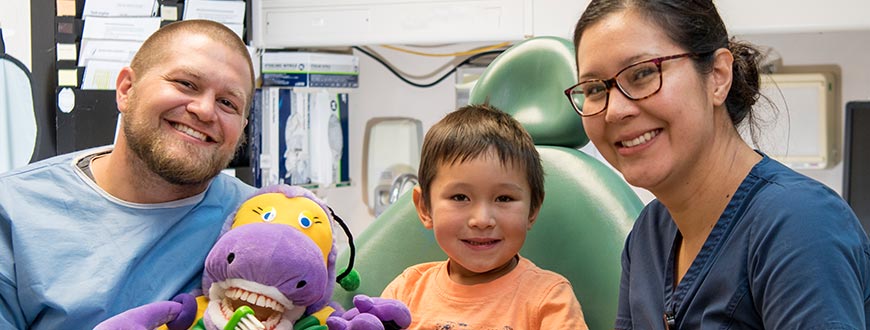
You became a dental health professional to help others. That’s why the Indian Health Service (IHS) invites you to consider working as an IHS dentist or dental hygienist. As an IHS dental health professional, providing comprehensive, culturally competent, quality patient care to American Indians and Alaska Natives will be your primary focus.
You’ll start an exciting new chapter of your life in a vibrant, culturally rich community. Not only will you make a lasting impact on the health of your patients, but you’ll also have a unique opportunity to live and work in some of the most scenic destinations in the continental United States and Alaska.
With eligibility for the IHS Loan Repayment Program (LRP), your commitment to public health dentistry could include financial assistance in paying down your dental education expenses. This is in addition to competitive pay, bonuses, comprehensive health care coverage and opportunities for advancement.
Above all, you will make a powerful impact on a medically underserved patient population in the beautiful community you call home.
The IHS Professional Experience

Private practice vs. public health. Current IHS dentists explain how IHS allows them to provide the best care for their patients.
Watch Video
The IHS Professional Experience

Learn how you can enjoy a great work/life balance at IHS from current IHS dentists who share their experiences.
Watch Video
Explore Rewarding Careers as an IHS Dentist
IHS dentists find immense career satisfaction. Not only do they provide much-needed dental care but also serve as advocates for improved oral health within their chosen communities by identifying and treating dental disease and other dental issues that can impact an individual beyond the dental chair. In addition to conducting routine procedures like tooth extractions and placing fillings, their work entails interpreting X-rays and diagnostic tests, ensuring the safe administration of anesthetics, monitoring the growth and development of teeth and responding to complications like infections and bleeding.
Become an IHS dentist today! View current openings
IHS Dental Hygienists Play Equally Important Roles at IHS
IHS dental hygienists make a difference in their patients’ lives through oral health education and dental hygiene treatment. Beyond removing plaque and polishing patient’s teeth, IHS dental hygienists promote good oral health care by providing instruction on proper brushing and flossing, as well as taking oral health histories and X-ray images of patients’ teeth for analysis. They also get involved outside of the practice by coordinating and improving life-changing health programs in their communities.
Become an IHS dental hygienist today! View current openings
Contact an IHS Dental Recruiter
Division of Oral Health | 5600 Fishers Lane | Mail Stop: 08N34 A | Rockville, MD 20857 | Phone: 800-447-3368 | Email: dentaljobs@ihs.gov
Sign up for the IHS Dental Careers listserv
Like or Follow IHS Dental Careers on Facebook
