
Program Evaluation Reports
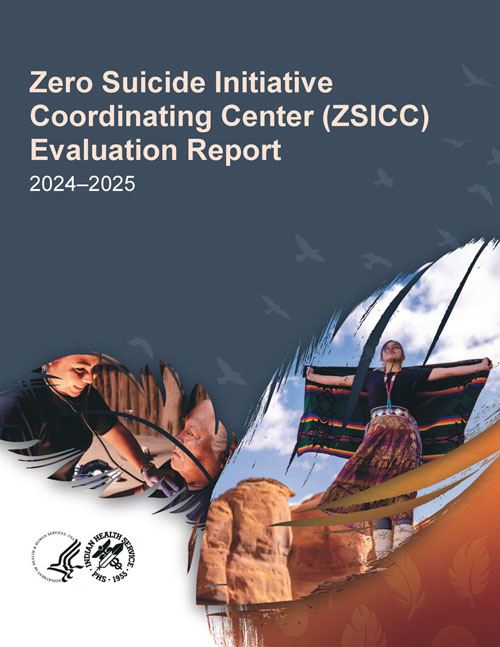
Zero Suicide Initiative Year Two Report
Zero Suicide Initiative Coordinating Center (ZSICC) Monitoring Report 2024-2025 [PDF 4 MB]
This report summarizes findings from evaluations of the Zero Suicide Initiative (ZSI) Urban Indian Organizations (UIO) grantees. The evaluations show that UIOs made significant progress on all seven ZSI elements. No deaths by suicide were reported among their patient populations, which indicates that ZSI may be having its intended impact. As the UIO ZSI grantees move into year four of their five-year grants, they are transitioning from implementation to begin planning to sustain their ZSI model after IHS grant funding ends. Also, they are working to address key implementation challenges and work towards full and sustained ZSI implementation. As grantees continue their ZSI implementation, five overarching lessons learned emerge from their efforts thus far. The report highlights key implications related to implementation of the Zero Suicide model within Urban Indian Health Organizations.
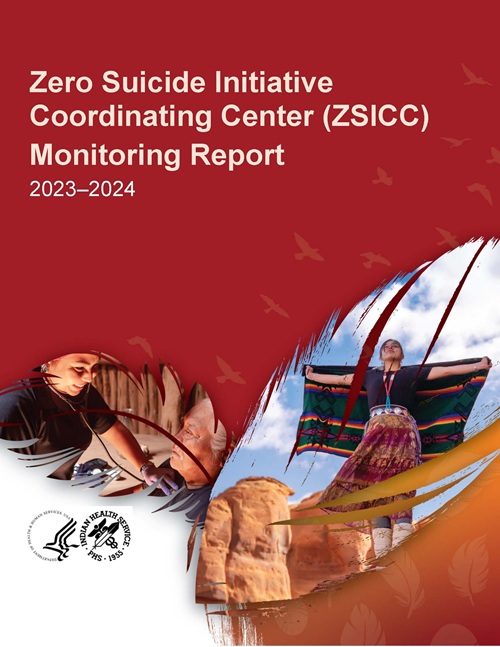
Zero Suicide Initiative Year One Report
Zero Suicide Initiative Coordinating Center (ZSICC) Monitoring Report 2023-2024 [PDF 4 MB]
This first year report summarizes findings from evaluations of the Zero Suicide Initiative (ZSI) Urban Indian Organizations (UIO) grantees. The report findings show that UIOs made significant progress on all seven ZSI elements. No deaths by suicide were reported among their patient populations, which indicates that ZSI may be having its intended impact. The report highlights key implications related to implementation of the Zero Suicide model within Urban Indian Health Organizations.
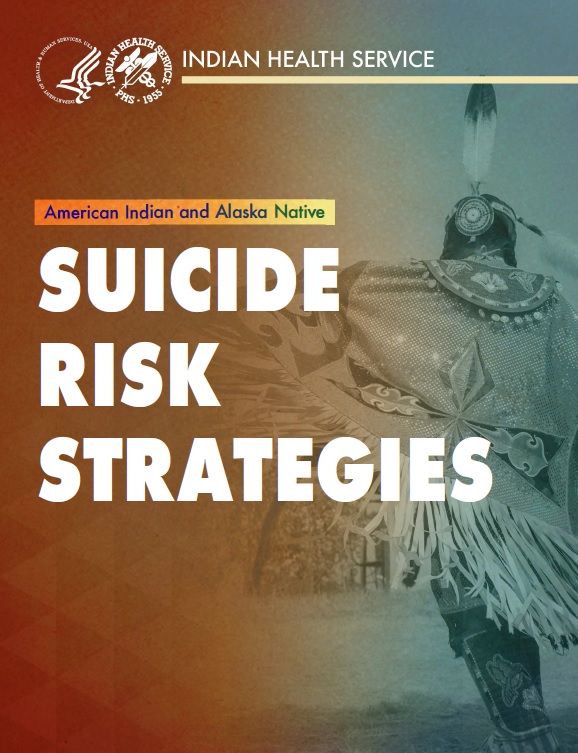
Suicide Prevention Strategies
Suicide Risk Strategies Report [PDF 1.5 MB]
This report summarizes findings from evaluations of multiple Indian Health Service suicide prevention initiatives, including the Zero Suicide Initiative, emergency department protocol pilots, and the Ask Suicide-Screening Questions (ASQ) implementation. The analysis finds that rapid, standardized suicide screening—when paired with staff training, referral protocols, and data dashboards—substantially improves identification of suicide risk, even in small and rural facilities. However, inconsistent protocol fidelity, limited follow-up documentation, and weak data integration constrained outcome measurement across sites. The report highlights key policy issues including under-detection of suicide risk, uneven adoption of evidence-based screening tools, workforce training gaps, and limited national surveillance. Policy implications include national adoption of ASQ, coordinated use of screening dashboards, strengthened protocol compliance, and establishment of an advanced risk mitigation program to align data, training, and service responses across IHS and Tribal systems.
Potential Gaps in the Substance Use Disorder Continuums of Services
Potential Gaps in the Substance Use Disorder Continuums of Services Report [PDF 1.8 MB]
This report examines national demand, capacity, and policy barriers affecting substance use disorder services for American Indian and Alaska Native youth. The analysis finds that treatment demand far exceeds available inpatient and aftercare capacity, with Youth Regional Treatment Centers meeting less than five percent of estimated need, while fragmented policies, workforce constraints, and reimbursement limitations impede continuum-of-service development. The report highlights key policy issues including insufficient aftercare, lack of national data oversight, barriers to reimbursing culturally based services, and limited authority to test digital service models. Policy implications include development of a national youth substance use disorder strategy, improved reimbursement mechanisms, expanded analytic capacity, coordinated federal–Tribal governance, and investment in digital continuums of care to support prevention, treatment, and recovery.
Residential Treatment Aftercare
Residential Treatment Aftercare Report [PDF 3.7 MB]
This report evaluates a multi-year pilot project testing aftercare models for American Indian and Alaska Native youth discharged from residential treatment centers. The evaluation finds that structured aftercare and case management can support sobriety and engagement, but implementation was constrained by limited staffing, weak data collection, insufficient memoranda of agreement, and lack of integrated communication tools—challenges intensified by the COVID-19 pandemic. Key policy issues include inconsistent referral tracking, limited family engagement, absence of peer recovery models, and insufficient evidence on cost-effectiveness. Policy implications emphasize the need for standardized aftercare frameworks, improved data systems, culturally grounded engagement, technology-enabled service coordination, and national dissemination of effective aftercare practices.
Tribal Behavioral Health Risk Prevention and Service Capacity Development, 2015–2021
Tribal Behavioral Health Risk Prevention And Service Capacity Development From 2015 To 2021 Report [PDF 1.8 MB]
This report synthesizes findings from a six-year national cohort of 257 Tribal partnerships funded to mitigate substance use disorders, violence, and suicide among American Indian and Alaska Native persons. The evaluation finds that Tribal partners successfully expanded local service capacity, completed extensive risk screening, and sustained engagement during the COVID-19 pandemic, while facing persistent barriers related to data infrastructure, cross-sector coordination, and aftercare continuity. The report highlights key policy issues including gaps between screening and sustained recovery, unresolved outcomes for victims of violence, geographic concentrations of severe risk, and limited analytic tools to prioritize investments. Policy implications emphasize the need for applied analytics, jurisdiction-specific contracting, interoperable data systems, and scalable federal–Tribal partnerships to strengthen long-term risk mitigation.
Tribal Behavioral Health Service Capacity Development Programs: Year Three
Tribal Behavioral Health Service Capacity Development Programs: Year Three of Five Report [PDF 1.6 MB]
This report summarizes findings from analyses applied to 113 projects operated by 83 Tribal partners building behavioral health risk mitigation capacity nationwide. The report finds highly uneven performance, with a small number of projects delivering most client engagement while many others show weak screening fidelity, limited outcome measurement, and high costs per engagement. The report highlights key policy issues including declining risk screening rates, gaps between identified risk and verified outcomes, rising complexity of substance use, violence, and suicide risk patterns, growing use of traditional and cultural healing, and the need for mid-program course corrections. Policy implications include stronger performance accountability, improved screening and outcome measurement, integration of traditional healing into service models, and geo-analytic planning to better align funding with demonstrated need before program completion in 2027.
Tribal Behavioral Health Service Capacity Development: Second Year
Tribal Behavioral Health Service Capacity Development: Second Year Report [PDF 972 KB]
This report evaluates year-over-year progress among the cohort of 113 Tribal projects, emphasizing changes from initial capacity building to expanded service delivery. Findings show substantial increases in client engagement, risk screening, volunteer participation, and protocol refinement, alongside continued staffing constraints and uneven use of spiritual and aftercare-oriented services. The report highlights key policy issues including rising detection of substance use, violence, and suicide risk; gaps in long-term recovery and spiritual health integration; and persistent technology needs to manage referrals and outcomes. Policy implications call for geo-analytic prioritization, targeted technical assistance, interagency coordination, and investment in digital infrastructure to sustain gains and address emerging risk patterns.
Tribal Behavioral Health Service Capacity Development: Year One
Tribal Risk Prevention and Service Capacity Development, 2021 Cohort Year One Report [PDF 1.2 MB]
This report presents baseline findings from 113 projects operated by 83 Tribal partners during the first year of a five-year behavioral health service capacity initiative. The analysis shows early progress in staffing, training, community engagement, and protocol development, alongside wide variation in readiness, measurement practices, and digital capability. The report identifies key policy issues including workforce recruitment challenges, incomplete service protocols, limited client-level outcome tracking, and uneven adoption of culturally grounded and technology-enabled practices. Policy implications focus on strengthening technical assistance, standardizing low-burden data collection, accelerating digital service protocols, and supporting Tribes in building whole-person, locally appropriate service models.
