August 03, 2026: IHS Updates for Tribes and Tribal and Urban Indian Organizations
The bi-weekly update provides up-to-date information on recent events, meetings, conferences, upcoming deadlines, and recognition of the work being done across the Indian Health Service, other federal agencies, and Indian Country. For more information or questions, please email IHSPublicAffairsStaff@ihs.gov.
IHS Leaders Visit Montana to Strengthen Tribal and Urban Indian Health Partnerships
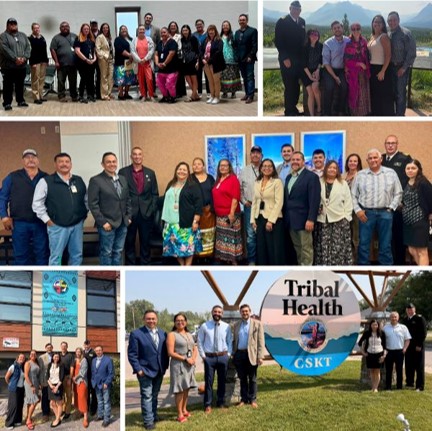
In July, the Billings Area welcomed IHS Chief of Staff Clayton Fulton and Director of Strategic Initiatives, Dr. Kim Hartwig, for visits highlighting the strength of federal, Tribal, and urban Indian health partnerships across Montana. The itinerary included the Blackfeet Service Unit, Heart Butte Clinic, the Confederated Salish and Kootenai Tribes, and All Nations Health Center in Missoula, Montana.
At each stop, leaders met with Tribal officials, healthcare staff, and community partners to discuss healthcare delivery, workforce priorities, self-governance, and opportunities to strengthen access to culturally centered care. While visiting the Blackfeet Nation, Fulton and Hartwig also participated in a wellness engagement supporting the Administration’s Make America Healthy Again (MAHA) initiative. Dr. Kimberly Paul, director of the Piikani Lodge Health Institute, shared how traditional Blackfeet teachings and food sovereignty promote community wellness.
Throughout the week, one message remained clear: strong partnerships are essential to improving the health of American Indian and Alaska Native communities. The IHS thanks all partners for their hospitality, collaboration, and continued commitment to the communities they serve.
IHS Announces Selection of Projects for the Capital Infrastructure Program
On July 23, the IHS announced the selection of seven projects for the fiscal year 2026 Capital Infrastructure Program. $5 million was awarded that support improvements to existing health care facilities to reduce operating costs, improve energy and water efficiency, and enhance overall facility performance:
- Cheyenne River Health Center (Eagle Butte, South Dakota) – ASHRAE 170 Upgrades
- McGrath Sub-Regional Health Center (McGrath, Alaska) – LED Lighting Retrofit
- Confederated Tribes of Grand Ronde Health & Wellness Clinic (Grand Ronde, Oregon) – HVAC Upgrade Project
- Quentin N. Burdick Memorial Health Care Facility (Belcourt, North Dakota) – Facility Lighting Replacement
- Cheyenne River Health Center (Eagle Butte, South Dakota) – Exterior Improvements
- Dena’ina Wellness Center (Kenai, Alaska) – Kenaitze Solar Installation Project
- Consolidated Tribal Health Project (Mendocino County, California) – Solar Carport Photovoltaic System (partially funded)
From increasing energy efficiency to reducing our environmental impact, each project represents the ongoing commitment of the IHS to improving health care outcomes for our patients.
Tribal Self-Governance Advisory Committee Convenes in Washington, D.C.
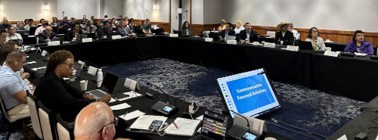
On July 28, IHS Chief of Staff Clayton Fulton provided opening remarks for the Tribal Self-Governance Advisory Committee (TSGAC) meeting in Washington, D.C. Fulton was joined at the meeting by Deputy Director Benjamin Smith and Deputy Director for Intergovernmental and External Affairs Stacey Ecoffey. The TSGAC plays a critical role in advising the IHS director on issues affecting all Title V self-governance Tribes and in strengthening Tribal administration of federal health programs. Through consensus-based policy guidance, problem solving, and open dialogue, the committee provides an essential forum for advancing the Tribal-federal partnership. Topics covered during the two-day meeting included the IHS hiring initiative, a 2026 Budget update, the PATH electronic health record implementation, sanitation facilities construction, and work by the IHS related to the GAO high risk list. The IHS expresses its appreciation to members of the TSGAC for their ongoing commitment to improving the delivery of health care in American Indian and Alaska Native communities.
IHS Staff Recognized at HHS Departmental Award Ceremony
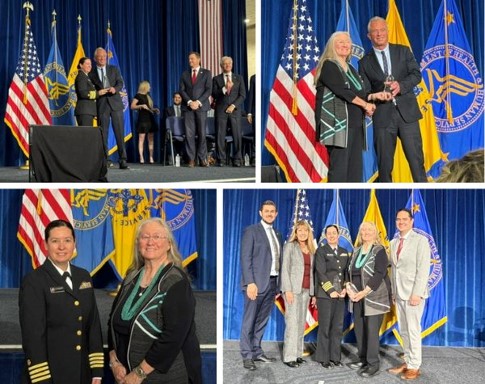
We extend congratulations to several IHS employees who received recognition on July 27 during the HHS Departmental Award Ceremony. These awards recognize teams and individuals across HHS whose leadership, exceptional performance, and customer service exceed normal expectations. Following a comprehensive selection process that included review by the Departmental Awards Board, the Assistant Secretary for Administration, and the Secretary, please join in congratulating the following award recipients on their outstanding achievements.
- Hubert H. Humphrey Award for Service to America: Loretta Christensen, Chief Medical Officer
- Secretary’s Award for Distinguished Service: Amanda Lessert, Director of Innovation and Improvement, Office of Quality
Dr. Christensen and Capt. Lessert were also recipients of the 50-Year Length of Service Award, along with Division of Asset Management Director Sarah Nelson, Phoenix Indian Medical Center Dental Assistant Supervisor Cynthia Yazzie, and Lawton Service Unit Public Health Nurse Eileen Wallace.
Congratulations to all! Fifty years of federal service is exceptionally rare. The lasting impact you have had on patients, communities, and colleagues throughout your careers cannot be overstated. Your dedication, leadership, and commitment to public service exemplify the values of HHS and IHS and strengthen our ability to serve American Indian and Alaska Native communities each day.
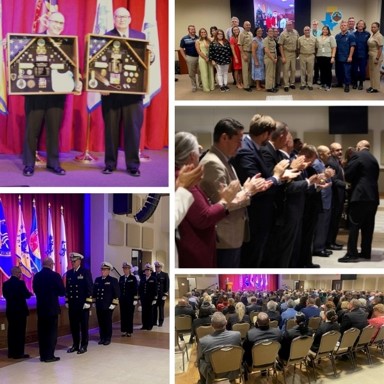
IHS Celebrates the Careers of RADM Travis Watts and Dr. Greggory Woitte
Last week, the IHS honored the distinguished careers and retirements of Rear Adms. Travis Watts and Greggory Woitte, M.D., recognizing their decades of exemplary service to the IHS, the U.S. Public Health Service Commissioned Corps, and Tribal communities across Indian Country. Throughout their careers, both leaders demonstrated an unwavering commitment to improving the health and well-being of American Indian and Alaska Native people.
Rear Adm. Watts, a citizen of the Choctaw Nation, dedicated more than 35 years to advancing pharmacy practice, strengthening health care delivery, mentoring future health professionals, and leading the Oklahoma City Area, which serves more than 400,000 patients across 43 Tribal Nations.
Dr. Woitte devoted more than two decades to providing exceptional clinical care, advancing women’s health, leading emergency response efforts, and serving as Chief Medical Officer for the Oklahoma City Area. His leadership during Hurricane Maria and the COVID-19 pandemic exemplified his dedication to service.
Together, Rear Adm. Watts and Dr. Woitte leave behind a legacy of leadership, compassion, and excellence that has strengthened the Indian health system and will continue to inspire future generations of public health professionals.
Chickasaw Nation Holds Groundbreaking Ceremony for Newcastle Medical Center
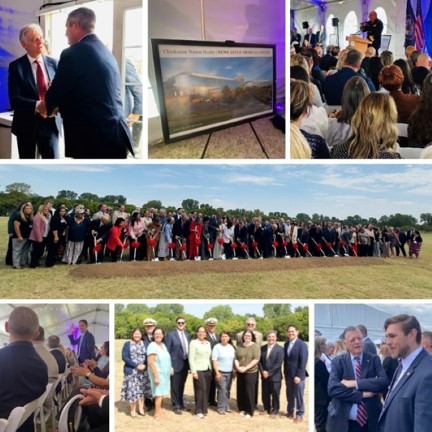
On July 31, IHS Chief of Staff Clayton Fulton, Deputy Director Benjamin Smith, Director of Strategic Initiatives Dr. Kim Hartwig, and other IHS staff attended the groundbreaking ceremony for the Chickasaw Nation Health Newcastle Medical Center in Newcastle, Oklahoma. The ceremony marked the start of construction on the Newcastle Joint Venture Project, a significant collaboration between the Chickasaw Nation and the IHS to expand access to high-quality health care for American Indian and Alaska Native communities.
When completed, the state-of-the-art medical center will offer a broad range of primary, outpatient, and specialty care services, graduate medical education and residency programs, and the nation's first Native American research center. The facility is expected to become one of the largest and most comprehensive First American health care campuses in the country, strengthening the regional health care workforce and advancing clinical care, research, and medical education.
Oklahoma City Area Director Rear Adm. Travis Watts delivered remarks on behalf of the Indian Health Service, highlighting the importance of the longstanding partnership between IHS and the Chickasaw Nation and their shared commitment to improving health outcomes. The ceremony was attended by numerous federal, Tribal, state, and local leaders, including Centers for Medicare & Medicaid Services Administrator Dr. Mehmet Oz and Congressman Tom Cole.
Secretary Kennedy Visits IHS Headquarters
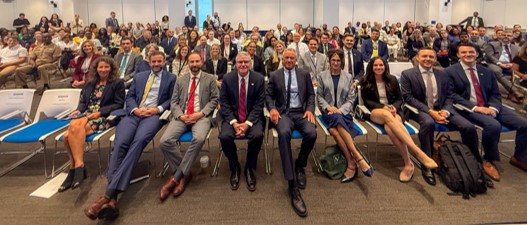
On July 29, HHS Secretary Robert F. Kennedy, Jr., joined the dedicated public servants of the IHS, Health Resources and Services Administration, Substance Abuse and Mental Health Services Administration, and Agency for Healthcare Research and Quality for a fireside chat at IHS headquarters in Rockville, Maryland. Kennedy discussed the shared mission to improve the health of every American, strengthen our public health system, and continue advancing the priorities of the Make America Healthy Again agenda.
IHS leadership and staff also met one-on-one with Kennedy and his team, which included the opportunity to present on the IHS Produce Prescription Pilot Program, behavioral health initiatives supporting the Great American Recovery, and infrastructure investments at IHS. We appreciate the opportunity to connect with Secretary Kennedy as we continue working together to serve our patients across Indian Country.
IHS Provides Training on Human Trafficking at Indian Police Training Conference
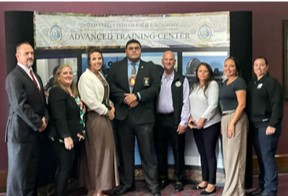
Forensic Nurse Consultant Nicole Stahlmann had the opportunity to provide human trafficking training and education to attendees at the 4th Annual United States Indian Police Academy Instructor & Certification Training Forum, held July 21–23 in Tulsa, Okla. Part of the training focused on human trafficking in Indian Country, with an emphasis on medical forensic health care and best practices across multidisciplinary teams. The gathering fostered meaningful collaboration and networking, with the opportunity to connect Bureau of Indian Affairs and IHS staff with those in the field.
IHS Explores New Mapping Technology to Improve Health Care
In July, more than 20 IHS geospatial leaders and experts from across the agency attended the 46th annual Esri User Conference in San Diego, Calif., joining geographic information system (GIS) professionals from around the world to explore emerging technology and innovative mapping solutions.
The conference provided opportunities to learn best practices, strengthen collaboration across the IHS, and identify new ways to use geospatial data to improve health care delivery, infrastructure planning, and decision-making. Current IHS GIS initiatives include the Find Healthcare Map, the Division of Sanitation Facilities Construction public project dashboard, water and sewer utilities inventory, Healthy Homes mapping, and cancer care services for Tribes and urban Indian organizations.
IHS geographers also presented during the Native Nations Symposium and met with Esri Founder and President Jack Dangermond to discuss how GIS is helping advance the IHS mission through data-driven innovation.
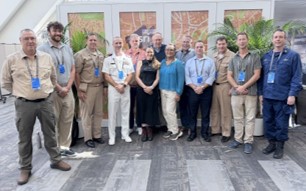
IHS geospatial staff with Esri Founder and President Jack Dangermond at the Esri User Conference
Locking Pill Bottles Pilot Program Highlighted at National Injury and Prevention Conference
The Locking Pill Bottle Pilot Program was featured at the recent IHS National Conference on American Indian and Alaska Native Injury & Violence Prevention as an innovative approach to improving medication safety. The pilot promotes the secure storage of prescription medications, cannabis products, and other high-risk items, while encouraging collaboration among pharmacy, clinical, behavioral health, and community-based programs to help prevent accidental poisonings and reinforce safe medication storage practices. Click here to learn more or to get started with your local program.
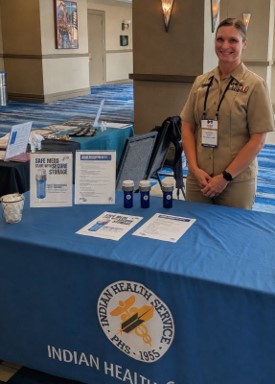
Cmdr. Samantha Gustafson, Red Lake Hospital advanced practice pharmacist & HOPE Committee treatment and recovery co-lead, shares information during the summit
Public Affairs Continues Eat Real Food Initiative
Following the July launch of its traditional food campaign, Rooted in Culture: Native Foods of America, IHS Public Affairs continued efforts to highlight examples of traditional foods and Indigenous knowledge systems that promote health and well-being among American Indian and Alaska Native communities.
Joining the larger HHS Eat Real Food Initiative, the campaign recently shared the strong cultural connection and nutritional benefits of salmon for the Native nations of the Pacific Northwest, reliance of Alaska communities on hunting moose for sustenance, significance of wild rice in Ojibwe culture and language, and the nourishment of chokecherries for Indigenous communities across the Great Plains.
Please follow the campaign on the agency’s social media platforms over the next several months as the IHS continues to celebrate the history, cultural significance, and health benefits of traditional Indigenous foods.

Graphic from the “Rooted in Culture: Native Foods of America” social media campaign on July 16 featuring moose as sustenance in Alaska
Telebehavioral Health Center of Excellence Webinar Series
The Telebehavioral Health Center of Excellence Tele-Education Program is hosting the following webinar for health care providers:
- Telehealth Webinar Series: "Medications for Trauma Related Disorders” on August 11 at 12:00 p.m. ET | Register here
- Program Sustainability Webinar Series: "Leveraging Partnerships for Sustainability” on August 17 at 12:00 p.m. ET | Register here
- Telehealth Webinar Series: "Psychological Trauma after Physical Injury or Illness: Considerations to Optimize Recovery” on August 18 at 12:00 p.m. ET | Register here
- Child and Adolescent Behavioral Health Webinar Series: "Integrating Rhythm and Music Interventions into Treatment for Children with Neurodevelopmental Disorders (NDDs)” on August 20 at 2:00 p.m. ET | Register here
IHS Blogs
Subscribe to the IHS blog by providing your name and email address in the “Stay Connected” box.
Social Media
Follow the IHS on Facebook, LinkedIn, and X, to see more of what the IHS is doing in your community and around the country. You can also follow the IHS Director on Facebook and X.