

Improving Balance for Elders
Improving Balance for Elders
Balance helps you live well as you get older. Good balance helps you keep doing the things you enjoy, like walking outside, joining family activities, taking part in ceremonies, and gathering traditional foods.
Share


View Handout [PDF – 2.2 MB]
Why balance matters
As you get older, it may take more care to stay steady, get out of bed, use stairs, or walk on uneven ground. Good balance can help prevent falls.
Diabetes and balance
Diabetes can damage your nerves, affecting your sense of balance. Your feet may also feel numb. This can increase your risk of tripping or falling.
Balance exercises can help
Doing simple balance exercises several times a week can help you avoid falls. You may notice that you:
- Move more easily
- Feel steady on your feet
- Change position more safely
- Worry less about falling
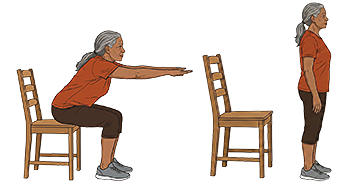
Chair Rise
- Stand in front of a stable chair.
- Lower yourself until your buttocks just barely touch the chair, but do not sit down.
- Slowly stand up. Try not to use your hands to push off of the chair.
- Do 8 - 10 chair rises.
- Rest for 30 seconds.
- Do this 2 - 3 times.
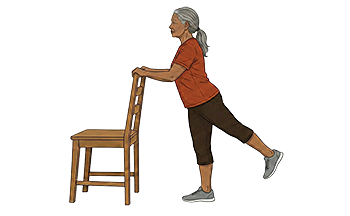
Back Leg Raises
- Stand behind a stable chair or counter.
- Keeping both legs straight, lift one leg back as high as you can. Hold for 1- 5 seconds.
- Switch legs and repeat.
- Do this 8 - 12 times, switching legs each time.
Single Leg Stance
- Stand next to a stable chair or counter. Hold on for support.
- Bend your knee to lift one foot. Hold for 10 - 20 seconds.
- Switch legs and repeat.
- Do this 5 - 10 times, switching feet each time.
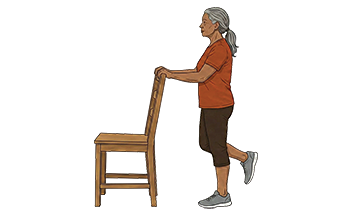
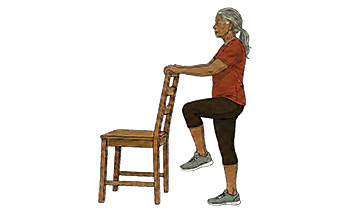
Marching in Place
- Stand behind a stable chair or counter. Hold on for support.
- March in place 5 - 10 times, lifting each knee as high as you can.
- Rest for 30 seconds.
- Do this 2 - 4 times.
The National Institute on Aging has more exercises you can add to your routine.
