

CHR Mini-Cog Screening Pilot
Report: Cognitive Screening Tools in a Community Health Setting

Recognizing the critical role of CHRs as trusted, community-based health workers who bridge cultural and geographic gaps in care, the IHS CHR and Alzheimer's Programs conducted a six-month pilot from January to July 2025 to assess the feasibility of CHRs integrating the Mini-Cog© cognitive screening tool into community-based settings. Twenty CHR programs across tribal, federal, and urban sites participated in this second pilot cohort.
Read about the findings in our CHR Project Evaluation Report: Implementation of a Cognitive Screening Tool in a Community Health Setting.
The CHR Mini-Cog Screening Pilot is a multi-year project testing how well the Mini-Cog tool works to screen patients for memory and thinking issues in community settings. The project also helps develop a referral process for individuals needing follow-up care.
Project Goals
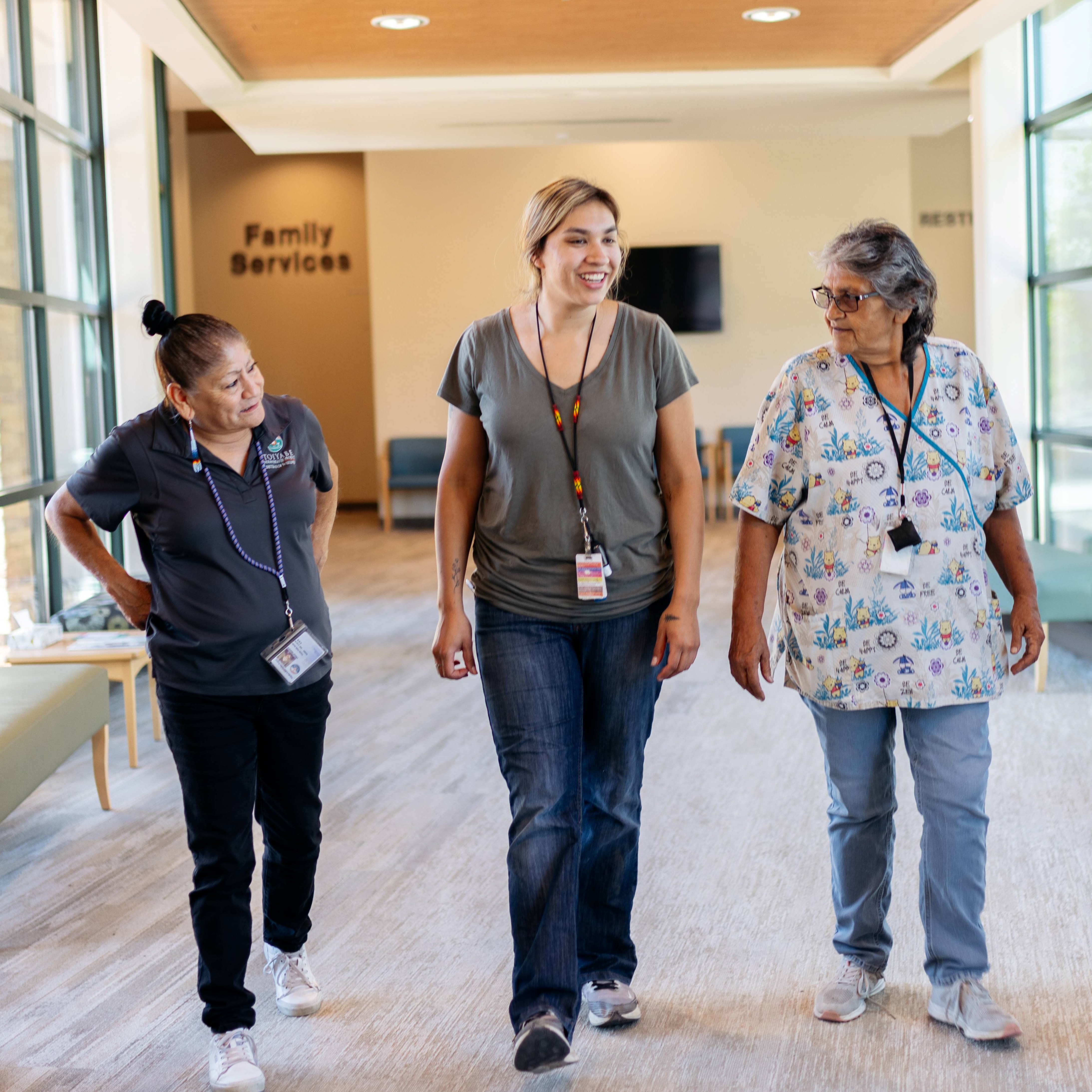
The IHS Alzheimer's Program provides funding to support Community Health Representative (CHR) programs to test screenings and other dementia-related services through short-term pilot projects.
The CHR Mini-Cog Screening Pilot is designed to:
- Increase dementia and Alzheimer’s awareness in American Indian and Alaska Native communities
- Build peer-to-peer learning networks for CHRs
- Improve data collection and documentation of screenings
Why Are CHRs Important in Dementia Care?
CHRs play a key role in supporting people with dementia and their caregivers. CHRs can:
- Promote early detection and diagnosis.
- Educate communities about dementia and brain health.
- Connect individuals and families to local resources and support services.
What should people know about CHRs?
- CHR-led cognitive screening works: Community Health Representatives can effectively and appropriately administer the Mini-Cog in community settings, reaching individuals who may not otherwise access care.
- Early identification matters: Screening increases awareness of Alzheimer’s disease and related dementias and helps identify individuals who may benefit from further evaluation and support.
- CHRs are a critical workforce: As trusted community members, CHRs are uniquely positioned to reduce stigma, engage patients, and bridge gaps between communities and the health care system.
- Integration is the next step: The full impact of screening depends on strengthening referral pathways, provider engagement, and CHR–clinical care coordination.
- The model is scalable with support: With appropriate training, resources, and system alignment, CHR-led screening can be expanded and sustained across programs.
- CHR-led screening is feasible and effective: CHRs can successfully deliver cognitive screening in community settings, increasing access and identifying individuals at risk who might otherwise go unrecognized.
- Early detection and awareness are critical: Community-based screening helps normalize conversations about dementia and supports earlier identification and connection to care.
- Stronger integration will maximize impact: Expanding this model requires improved referral pathways, provider engagement, and alignment between CHR programs and clinical care systems.
Progress and Outcomes
- Screened 957 individuals across 20 CHR programs
- Identified 16% (150 individuals) with possible cognitive impairment
- Demonstrates strong community reach and ability to detect previously unrecognized risk
- Each positive screen represents an opportunity for early intervention
- Even with only 2 confirmed diagnoses, these are individuals likely missed without screening
- Early identification supports care planning, treatment, and family support
- 22% of positive screens were referred
- 42% of those referred had documented follow-up
- Highlights gaps in referral pathways and closed-loop communication
- 91% of screenings conducted by CHRs/CHWs
- 100% of sites agreed CHRs should conduct screenings
- 100% plan to continue using Mini-Cog
- Increased awareness of dementia and cognitive health
- Helped normalize conversations and reduce stigma
- Strengthened trust and engagement with elders and families
- Screening is feasible even without full clinical integration
- Impact is limited by weak CHR–clinic connections
- Success improves when:
- Screening is embedded in workflows
- Training and peer learning are strong
- Providers are engaged early
To learn more about Alzheimer's and Dementia, visit the Alzheimer's program website.
For more information on the Mini-Cog tool, visit the Mini-Cog website.
Read the pilot CHR Dementia Project Evaluation Report [PDF - 1.5 MB]
