
Southwestern Dietetic Internship (SWDI)

Program Description | SWDI Handbook | Interns | Mission | Calendar | Graduation | Cost | Application | FAQ | Deadlines | Accreditation
Internship Description

The Southwestern Dietetic Internship (SWDI) is an accredited, full-time dietetic internship offering distinctive supervised practice experiences in both urban and rural American Indian and Alaska Native communities. The program is administered through Phoenix Indian Medical Center (PIMC) in Phoenix, Arizona, and Pinon Health Center (PHC) in Pinon, Arizona, on the Navajo Nation. Both facilities are part of the Indian Health Service (IHS), an agency of the U.S. Department of Health and Human Services.
IHS provides federal healthcare services to American Indian and Alaska Native people. Its mission is to raise their physical, mental, social, and spiritual health to the highest level. In support of this mission, the SWDI emphasizes culturally responsive nutrition care and prepares interns to address the diverse nutrition needs of Tribal communities.
The SWDI is designed to develop competent, well-rounded dietetics professionals who are prepared to practice in a variety of healthcare and community settings. Interns gain hands-on experience in both urban and rural environments while developing skills in clinical nutrition, ambulatory care, community nutrition, food service management, and healthcare leadership.
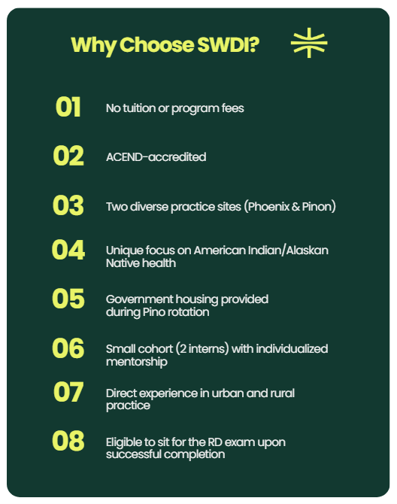
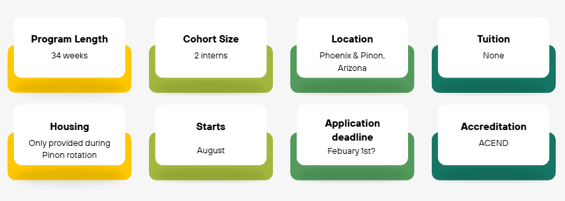
The program is completed over 34 weeks and requires a minimum commitment of 40 hours per week. Two interns are selected annually, and the program begins each August. Applications are accepted through the Dietetic Inclusive Centralized Application System (DICAS).
Upon successful completion of all program requirements, interns receive a Dietetic Internship Verification Statement and become eligible to take the Commission on Dietetic Registration’s Registration Examination for Dietitians. Successful completion of the examination is required to earn the Registered Dietitian Nutritionist credential.
SWDI Handbook
The internship handbook provides detailed information on the internship, preparing to be a SWDI intern, what to expect in the SWDI, and how to successfully pass the SWDI.
Intern Handbook [PDF 563 KB]
At a Glance
Intern Learning Experiences
Gain practical experience across hospital, outpatient, community, food service, and rural healthcare settings.
Clinical and Ambulatory Practice
Interns begin their supervised practice experience at PIMC, where they train alongside PIMC RDNs who provide comprehensive nutrition services in inpatient, ambulatory, food service, and community settings.
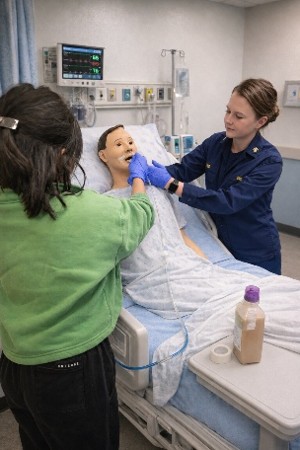
In the acute care environment, interns develop clinical competencies while providing nutrition care to hospitalized patients with a range of complex medical conditions. Interns apply the Nutrition Care Process, participate in interdisciplinary rounds, collaborate with healthcare professionals, and document nutrition care in the electronic health record.
Interns also gain experience in ambulatory care by providing individualized nutrition education and counseling to patients receiving services through PIMC clinics and specialty programs.
Community Engagement
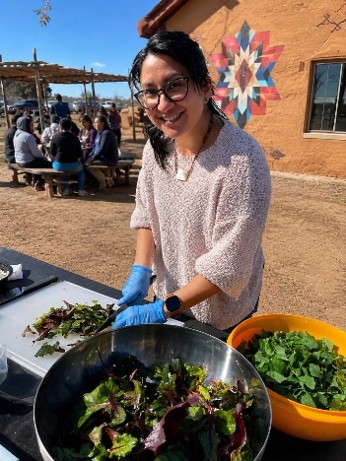
Beyond the hospital and clinic setting, interns may participate in field clinics, health fairs, group nutrition education, school-based activities, and community outreach programs in Tribal communities throughout the Phoenix area. These experiences allow interns to strengthen their communication and education skills, expand their understanding of community-based nutrition practice, and contribute to health promotion and disease prevention initiatives.
Food Service
Interns receive practical experience in managing hospital food service section Learning activities may include food safety and sanitation, menu planning, inventory management, cost analysis, quality improvement, and the delivery of meals that meet patients’ nutritional and therapeutic needs.
Management
Interns gain hands-on experience in the management and operations of a hospital nutrition department, with exposure to food service, ambulatory care, community services, and clinical nutrition. Learning experiences may include human resource management, negotiation and communication skills, quality improvement, and the analysis of finance, productivity, and performance data to support effective planning and decision-making.
Rural Community Practice
Interns continue their supervised practice experience in Pinon, Arizona, located on the Navajo Nation in the scenic Four Corners region of the southwestern United States. This rural rotation provides a distinctive opportunity to experience nutrition practice in a geographically remote community.
Interns may participate in the planning and implementation of community health promotion and disease prevention programs, individualized nutrition education, school nutrition activities, home visits, and other community-based services. The experience helps interns develop adaptability, resourcefulness, cultural responsiveness, and an understanding of the unique considerations involved in delivering nutrition services in rural Tribal communities.
Government housing is secured for interns during the Pinon rotation and is provided at no cost to the intern.
Becoming a Registered Dietitian Nutritionist (RDN)
There are several educational pathways to becoming a Registered Dietitian Nutritionist. The following steps describe the pathway for individuals who complete an Accreditation Council for Education in Nutrition and Dietetics (ACEND)-accredited Didactic Program in Dietetics followed by an ACEND-accredited Dietetic Internship, such as the SWDI.
Steps to Become an RDN
- Earn a graduate degree.
Candidates must complete a minimum of a graduate degree from an institution accredited by an accrediting agency recognized by the U.S. Department of Education. The degree must be completed before the candidate can be approved to take the Commission on Dietetic Registration credentialing examination.
- Complete an ACEND-accredited Didactic Program in Dietetics.
Complete a Didactic Program in Dietetics (DPD) accredited by the ACEND and obtain a DPD Verification Statement from the program.
- Complete an ACEND-accredited Dietetic Internship.
Candidates must successfully complete an ACEND-accredited Dietetic Internship and obtain a Dietetic Internship Verification Statement. The internship provides supervised, hands-on experience and prepares interns to demonstrate the competencies required for entry-level dietetics practice.
The SWDI provides the supervised practice component of this pathway and does not award a graduate degree. Applicants must meet the graduate degree and DPD requirements separately.
- Receive approval to take the credentialing examination.
After all SWDI requirements have been successfully completed, the program director submits the graduate’s eligibility information to the Commission on Dietetic Registration. Once eligibility is reviewed and approved, the candidate will receive authorization to schedule the credentialing examination.
- Pass the Commission on Dietetic Registration examination.
Candidates must pass the Commission on Dietetic Registration’s Registration Examination for Dietitians to earn the Registered Dietitian Nutritionist credential.
Graduates who successfully complete the ACEND-accredited SWDI, meet the applicable degree and DPD requirements, and receive examination eligibility approval are eligible to take the credentialing examination to become an RDN.M
State Licensure and Certification
State licensure and certification requirements are separate from the national RDN credential and vary by state. Although completion of an ACEND-accredited program fulfills the applicable educational and supervised practice requirements, program completion alone does not automatically qualify an individual for state licensure or certification.
Candidates should review the statutes and regulations of the state in which they plan to practice determining whether additional requirements apply. These requirements may include an application, examination, background check, fees, or other state-specific criteria.
Additional Information
- CDR Registration Examination Eligibility Requirements (*)
- CDR Graduate Degree Requirement (*)
- ACEND Educational Pathways (*)
- CDR State Licensure Information (*)
SWDI Mission, Goals and Expected Outcomes
Mission
The mission of the SWDI is to prepare entry-level RDNs to provide culturally responsive, comprehensive nutrition services in AI/AN communities. The SWDI mission supports the mission of the IHS, which is to raise the physical, mental, social, and spiritual health of American Indian and Alaska Native people to the highest level.
Goals
- Goal 1: Prepare graduates to be competent entry-level RDNs.
- Goal 2: Increase the number of dietitians providing nutrition services to AI/AN communities.
- Goal 3: Increase the number of AI/AN professionals in the dietetics profession.
Objectives
Goal 1 Objectives
- At least 80% of program interns will complete program requirements within 12 months, or 150% of the program length.
- At least 80% of program graduates will take the CDR credentialing examination for RDNs within 12 months of program completion.
- The program’s one-year pass rate on the CDR credentialing examination for RDNs will be at least 80%. This measure includes graduates who pass the examination within one year of their first attempt.
- At least 90% of employers responding to the program survey will evaluate graduates’ entry-level skills as meeting overall competency requirements.
- Each year, the program’s mean score on the CDR credentialing examination for RDNs will meet or exceed the national mean score.
- Of graduates who seek employment, at least 70% will be employed in nutrition and dietetics or a related field within 12 months of program completion.
Goal 2 Objective
- At least 30% of employed graduates will work in programs or organizations that provide services to AI/AN people.
Goal 3 Objective
- At least 30% of program graduates will identify as enrolled members of federally recognized Tribes. This objective will be measured using information voluntarily provided by applicants through the program application.
Expected Outcomes
Program outcomes are evaluated annually to assess achievement of the SWDI goals and objectives and to support ongoing program improvement. SWDI program outcomes data are available upon request.
The SWDI program outcomes data are available upon request.
Program Calendar
Graduation and Program Completion Requirements
To successfully complete the SWDI, interns must fulfill all program requirements, including the following:
- Earn a rating of 3 or higher on all required curriculum components and a rating of “Meets Expectations” or higher on all professional attributes.
- Complete all rotation curricula and obtain the required preceptor signatures.
- Earn passing evaluations on all assigned projects and learning activities.
- Complete all required work and demonstrate achievement of all program competencies within the maximum allowable completion period of 51 weeks, which represents 150% of the 34-week program length.
- Complete all required rotation and program evaluations.
An intern who does not successfully complete a rotation may be permitted to repeat the rotation one time, in accordance with the program’s remediation and retention policies. Failure to successfully complete the rotation after the second attempt will result in dismissal from the program. Additional information regarding performance expectations, remediation, program retention, dismissal, and successful completion requirements is available in the Southwestern Dietetic Internship Handbook.
Upon successful completion of all program requirements and competencies, graduates will receive a Dietetic Internship Verification Statement. The SWDI program director will submit eligible graduates to the Commission on Dietetic Registration (CDR) for approval to take the Registration Examination for Dietitians.
Program Costs and Financial Considerations
The SWDI does not charge tuition or an application fee. Government housing is also secured and provided at no cost to interns during the rural rotation in Pinon. Interns should, however, plan for the following personal and professional expenses associated with participation in the program:
Relocation and Phoenix-Area Housing
Interns are responsible for relocation expenses, when applicable, and for securing housing in the Phoenix area. As of July 2026, estimated apartment rents generally range from approximately $1,300 to $1,650 per month, depending on the location, unit size, amenities, and whether housing is shared. Security deposits, utilities, internet, parking, and other housing-related expenses may be additional.
Personal Vehicle and Travel Expenses
Pinon Health Center is approximately 275 miles from Phoenix Indian Medical Center, with an estimated one-way travel time of 4.5 to 5 hours. Interns are expected to travel from Phoenix to Pinon at the beginning of the rural rotation and return to Phoenix at the conclusion of the rotation. Interns are responsible for fuel and other expenses associated with operating a personal vehicle. Any additional personal or weekend travel is also at the intern’s expense.
When authorized for official duties, interns may travel as passengers in government vehicles but are not permitted to operate government vehicles. Interns who use personal vehicles remain responsible for maintaining appropriate automobile insurance and for costs and liabilities associated with their vehicles.
Health and Medical Requirements
Interns are responsible for costs associated with required medical examinations, health screenings, immunizations, and other pre-internship health requirements. Interns are also responsible for personal healthcare expenses incurred during the program.
Professional Membership
Student membership in the Academy of Nutrition and Dietetics is required. Current student membership dues are approximately $58 annually and are subject to change.
Professional Liability Insurance
Interns are required to maintain professional liability insurance throughout the program. Student policies currently begin at approximately $32 annually; actual premiums may vary based on the insurer, coverage selected, and applicable eligibility requirements.
Financial Aid
SWDI does not administer or provide financial aid for interns. Interns are responsible for planning and securing the financial resources needed to cover personal, travel, housing, and other internship-related expenses.
All costs are estimates and are subject to change. Prospective interns should verify current expenses when developing their personal budget.
Application and Admission Requirements
The SWDI seeks applicants who demonstrate strong academic preparation, relevant nutrition and dietetics experience, professional communication skills, and an interest in serving AI/AN communities.
Application Deadline
Applications for August 2027 admission must be submitted through the Dietetics Inclusive Centralized Application System (DICAS). The application window opens on November 1st and closes by 11:59 p.m. Central Time on January 15th, 2027.
Applicants are responsible for ensuring that their application and all required supporting materials are completed in DICAS by the published deadline. Applicable application fees are established and collected by DICAS.
Applicants who need assistance with the centralized application may visit the DICAS Applicant Help Center or contact DICAS customer support at 617-612-2855.
Eligibility Requirements
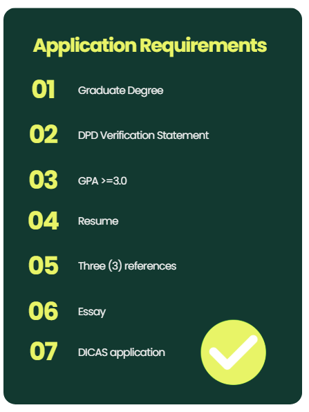
To be considered for admission to the SWDI, applicants must:
- Be a U.S. citizen.
- Hold a graduate degree from an appropriately accredited U.S. college or university or a recognized foreign equivalent before beginning the internship.
- Complete an Accreditation Council for Education in Nutrition and Dietetics (ACEND)-accredited Didactic Program in Dietetics.
- Have a minimum DPD grade point average of 3.0.
- Provide a DPD Verification Statement dated within five years of the application deadline or, if currently completing a DPD, a current Declaration of Intent to Complete.
- Possess a valid driver’s license, have access to reliable personal transportation, and maintain current automobile insurance.
Applicants who are completing their graduate degree or DPD requirements at the time of application may be considered. If selected, all degree and DPD requirements must be completed, and final documentation must be provided, before the internship begins.
Required Application Materials
Applicants must submit the following through DICAS:
- A complete DICAS application.
- Official transcripts from all colleges and universities attended.
- A current résumé documenting education, employment, volunteer activities, leadership, and relevant nutrition and dietetics experience.
- Three academic or professional recommendations. Recommendations from at least one faculty member and one current or former employer or supervisor are preferred. Recommendations from relatives or personal friends will not be accepted.
- The required SWDI supplemental essay.
- A personal statement.
- Any additional documents identified in the SWDI program listing within DICAS.
The DPD Verification Statement or Declaration of Intent must be requested through DICAS and completed by the applicant’s DPD program director.
Nutrition and Dietetics Experience
Relevant paid or volunteer experience is considered during the application review process. Examples may include experience as a dietetic technician, food service employee, dietary manager, nutrition educator, community health worker, or in another nutrition-related role.
Applicants with at least 1,000 documented hours of relevant experience receive the maximum available points for this portion of the application evaluation.
Supplemental Essay
Applicants must submit a single-spaced, one-page essay using one-inch margins that addresses:
- Three prevalent health-related challenges affecting AI/AN communities in rural, urban, or both settings.
- Potential evidence-informed approaches for addressing each identified challenge.
The essay should demonstrate the applicant’s analytical abilities, professional writing skills, and interest in serving AI/AN communities. Appropriate in-text citations must be included, with references provided on a separate second page.
The essay must represent the applicant’s original work. The use of generative artificial intelligence tools to draft, rewrite, or substantially edit the essay is prohibited.
Personal Statement
The personal statement should address:
- Why is the applicant interested in the SWDI.
- How the program aligns with the applicant’s personal and professional goals.
- The applicant’s relevant strengths and areas for continued professional growth.
- The applicant’s expectations of a dietetic internship and supervised practice experience.
- The applicant’s short- and long-term career goals.
Essential Participation Requirements
Interns must be able, with or without reasonable accommodation, to perform the essential activities of the program. These activities may include:
- Standing for extended periods.
- Lifting objects weighing up to 20 pounds independently.
- Lifting objects weighing up to 40 pounds with assistance from another person.
- Communicating effectively in spoken and written English.
- Using computers, electronic health records, and other electronic systems for extended periods.
- Maintain a valid driver’s license, have reliable access to a personal vehicle for required travel to assigned rotation sites, and maintain current vehicle registration and automobile insurance.
Credit for Prior Learning
The SWDI does not award supervised practice credit for prior learning, previous employment or professional experience, or graduate coursework.
RDN Credentialing Eligibility
To become eligible to take the CDR credentialing examination for RDNs, individuals must complete the applicable academic and supervised practice requirements established by the CDR and ACEND.
Graduates who successfully complete all requirements of the ACEND-accredited SWDI and receive a Dietetic Internship Verification Statement are eligible to apply to take the CDR credentialing examination for RDNs.
All documents and application requirements must be uploaded into DICAS by January 15th, 2027.
In most states, graduates also must obtain licensure or certification to practice. For more information about state licensure requirements Click Here .
For more information about educational pathways to become a RDN Click Here .
Application Deadlines
Apply Through DICAS
The SWDI accepts applications through the Dietetics Inclusive Centralized Application System (DICAS).
Applications for the August/Fall 2027 cohort must be submitted through DICAS by 11:59 p.m. Central Time on January 15th, 2027. Applicants are encouraged to begin the application process early to allow sufficient time for transcripts, recommendations, and other required materials to be received.
Applicants are responsible for:
- Completing and submitting the online DICAS application by the established deadline.
- Paying all applicable DICAS application fees.
- Requesting official transcripts from all colleges and universities attended in accordance with DICAS requirements.
- Providing the names and current email addresses of the individuals completing required recommendations.
- Confirming that all required application materials have been received and posted to their DICAS application.
DICAS Applicant Support
Application Portal: Dietetics Inclusive Centralized Application System
Email: support@dicas.myliaison.com
Phone: 617-612-2855
Support Hours: Monday through Friday, 9:00 a.m.–5:00 p.m. Eastern Time
Applicants may also access customer support through the chat feature within the DICAS application.
Accreditation Status
Program Accreditation
The SWDI is currently accredited by the ACEND of the AND.
Accreditation Council for Education in Nutrition and Dietetics (ACEND)
Email: ACEND@eatright.org
Phone: 800-877-1600, ext. 5400
Mail: 120 South Riverside Plaza, Suite 2190
Chicago, IL 60606-6995
Website: Accreditation Council for Education in Nutrition and Dietetics
SWDI Contact Information
CDR Charisse Holiday, PhD, MPH, RDN, CDCES, BC-ADM, CPH
Director, Southwestern Dietetic Internship
Phoenix Indian Medical Center
4212 N. 16th Street
Phoenix, Arizona 85016
Phone:602-581-6052
Email: Charisse.Holiday@ihs.gov
FAQs
-
No. All graduates of DPD programs are encouraged to apply.
-
Yes, the applicants selected must have the following:
- BLS/CPR certification. If the applicant does not have this, it will be scheduled during the first rotation.
- Background check. This will be completed in Phoenix and Pinon. The following documents are required as proof of identification: (a) Passport or (b) Driver's license PLUS Social Security card OR birth certificate.
The SWDI Handbook details additional requirements that must be submitted.
-
You are responsible for your own housing while in Phoenix. During the Pinon rotation, government housing arrangements will be made for you by the Site Coordinators. Family, friends and pets may not occupy government housing.
-
No, you are responsible for your own transportation, including auto insurance and a current driver’s license.
-
No, but our program provides information to interns on available jobs in the Indian Health Service and on the Arizona Academy of Nutrition and Dietetics listserve.
