August 17, 2026: IHS Updates for Tribes and Tribal and Urban Indian Organizations
The bi-weekly update provides up-to-date information on recent events, meetings, conferences, upcoming deadlines, and recognition of the work being done across the Indian Health Service, other federal agencies, and Indian Country. For more information or questions, please email IHSPublicAffairsStaff@ihs.gov.
IHS Leaders Meet with Alaska Native Health Board and Maniilaq Association
In early August, IHS Chief of Staff Clayton Fulton, Director of Strategic Initiatives Dr. Kim Hartwig, and other IHS leaders traveled to Alaska to meet with the Alaska Native Health Board and discuss key priorities affecting the Alaska Tribal Health System. The meetings provided an opportunity to strengthen collaboration, exchange perspectives, and explore strategies to improve health care delivery and outcomes for Alaska Native communities.
During the visit, Fulton and Dr. Hartwig joined staff from the HHS Assistant Secretary for Financial Resources for a trip to Kotzebue, where they met with leadership from the Maniilaq Association. The delegation toured the Maniilaq Health Center and learned about Siġḷuaq, Maniilaq's traditional food program, which supports community wellness by promoting access to culturally significant, locally harvested foods. These engagements highlight the shared commitment of federal and Tribal partners in fostering strong relationships, advancing Tribal self-determination, and building healthier, more resilient communities across Alaska.
California Area Director Beverly Miller Retires After 33 Years of Service
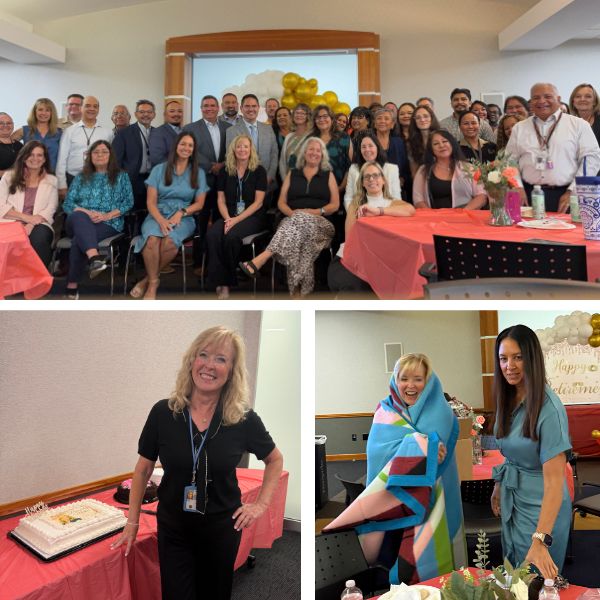
On August 13, the IHS celebrated the retirement of California Area Director Beverly Miller and her more than three decades of dedicated service to the agency, Tribes, and the people of California.
Miller began her IHS career in 1993 as a budget officer. Over the next 33 years, she took on positions of increasing responsibility, serving as associate director for the Office of Management Support, deputy director, and ultimately area director. She leaves a legacy that reaches across virtually every aspect of the California Area and will continue to benefit Tribes and Tribal communities for years to come.
Today, California has 236 Tribally operated facilities, and Title I contracts and Title V compacts have continued to expand. Her leadership helped make that growth work by improving processes and ensuring that payment and administrative systems work better for Tribal programs. Miller also helped advance major investments across California. She oversaw more than $50 million annually in 105(l) leases, representing more than 120 individual leases. During her time as area director, the California Area funded more than $237 million in Sanitation Facilities Construction projects, building partnerships not only within IHS, but also other federal agencies and the State of California.
We thank Miller for many years of exceptional service, leadership, dedication, and commitment. She has strengthened the California Area, strengthened our relationships with Tribes, and, most importantly, improved the foundation on which we deliver health care and services to Tribal communities. Congratulations on your retirement!
Iowa Tribe of Oklahoma Welcomes IHS for Ceremonial Signing of Self-Governance Compact
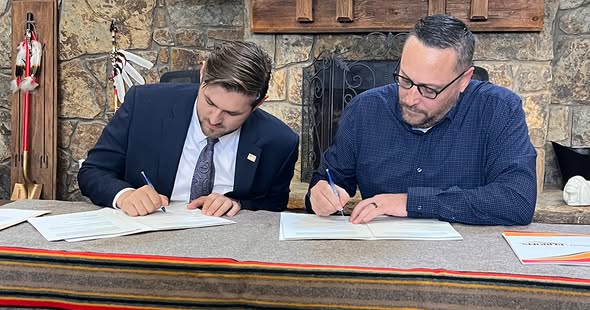
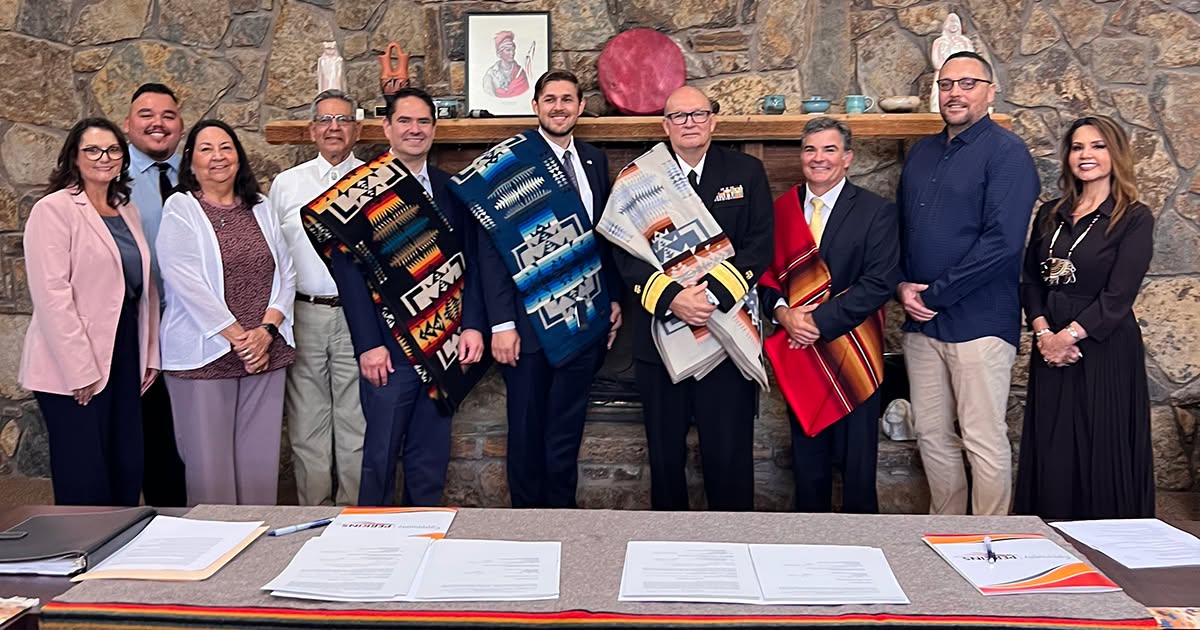
On July 31, the IHS was privileged to join the Iowa Tribe of Oklahoma for a significant milestone – the ceremonial signing of their Title V Tribal Self-Governance Compact. Effective July 1, the Iowa Tribe joined 398 federally recognized American Indian and Alaska Native Tribes that have chosen to participate in the IHS Tribal Self-Governance Program.
This agreement reflects a collaborative approach in which the Tribe assumes responsibility for selected programs, services, functions, and activities, while the IHS continues to fulfill its federal trust responsibilities by providing retained services and carrying out other inherent federal functions. Self-governance is built on partnership. As the Iowa Tribe assumes greater control over the administration of its health programs, the IHS remains committed to working alongside them.
Exercising self-governance empowers Tribal leaders to design, manage, and deliver programs in ways that reflect their community’s unique priorities, values, and vision for the future. Each Tribe that exercises self-governance strengthens the principle that Tribal nations are best positioned to determine how to meet the unique health care needs of their citizens. We appreciate the leadership of Chairman Jake Keyes, the Iowa Tribe’s elected officials, Tribal staff, and the teams from the Oklahoma City Area Office and IHS headquarters whose dedication made this milestone possible.
IHS Announces $15.3 Million in Funding for Eight Staff Quarters Projects
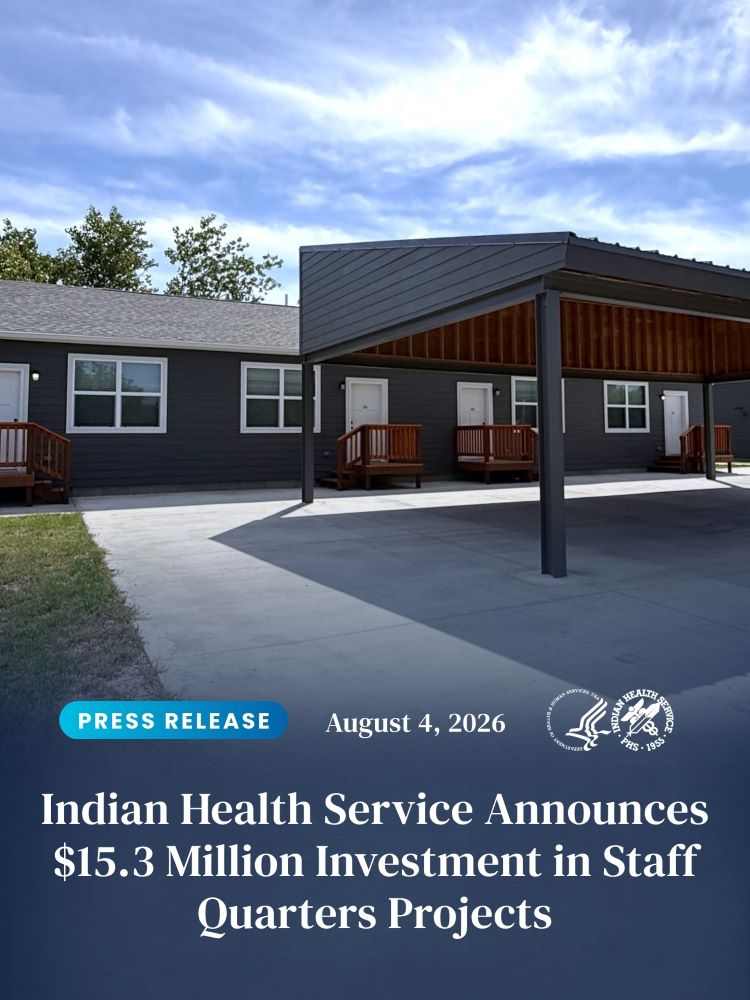
On August 4, the IHS announced $15.3 million in funding for eight staff quarters projects to support the health care workforce and facilities in Indian Country. Provided through the Healthcare Facilities Construction Funds Quarters Program, funding will be used for the following projects:
- Hoopa Valley Tribe, California Area – $3,651,000
- Southeast Alaska Regional Health Consortium (SEARHC), Alaska Area – $3,000,000
- Santee Sioux Nation, Great Plains Area – $2,386,000
- Chugachmiut, Alaska Area – $2,000,000
- Karuk Tribe, California Area – $1,505,000
- Kodiak Area Native Association (KANA), Alaska Area – $1,055,000
- Winnebago Tribe of Nebraska, Great Plains Area – $977,000
- Omaha Tribe, Great Plains Area – $757,000
Projects like these are critical for Indian Country and ultimately improve care for the Tribal communities that we serve. This demonstrates the continued strength of IHS-Tribal partnerships that are addressing important infrastructure needs, as well as our commitment to recruiting, hiring, and retaining qualified professionals in critical positions across the country. Read the press release here.
Health IT Modernization Program Soft Go-Live at Lawton Service Unit
The IHS Health IT Modernization Program is pleased to announce the Soft Go-Live of the PATH Electronic Health Record (EHR) system’s foundational registration and scheduling capabilities for the Lawton Service Unit in the Oklahoma City Area, including Lawton Indian Hospital, Anadarko Indian Health Center, and Carnegie Indian Health Center on August 1.
The PATH EHR Soft Go-Live includes the successful migration and validation of active patient and Tribal demographic records from the Resource and Patient Management System (RPMS). During this phase, PATH EHR will serve as the primary system for scheduling future patient appointments. This approach supports a safe and smooth transition to PATH EHR by validating patient information, familiarizing staff with core workflows, strengthening user proficiency, and promoting data quality while maintaining uninterrupted patient care and business operations.
We appreciate the collaboration and commitment of all staff during this phased implementation and look forward to the successful deployment of the PATH EHR system. For more information about the Health IT Modernization Program or PATH EHR, please email modernization@ihs.gov.
Area Directors Visit the IHS National Supply Service Center
Earlier this month, Area directors gathered in Oklahoma City, Okla., to visit the IHS National Supply Service Center, where they toured operations and learned more about the critical medical and logistical supply support services that help sustain healthcare delivery across the agency. The visit was followed by an afternoon session focused on agency priorities, collaboration, and strategies to achieve successful outcomes in healthcare service delivery. Together, these discussions reinforced our shared commitment to operational excellence and ensuring the resources are in place to support those we serve.
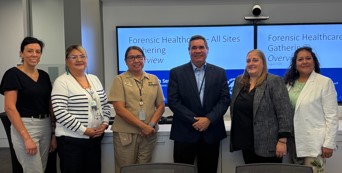
IHS Forensic Health Care Teams Gather to Strengthen Services
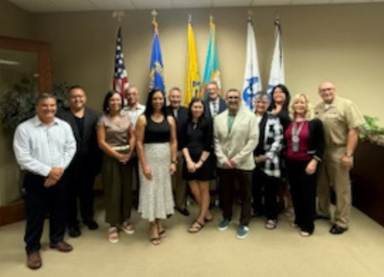
IHS forensic nurses and health technicians gathered at IHS Headquarters August 11–13 for the Forensic Healthcare Funding Opportunity All Site Gathering. Deputy Director for Management Operations Darrell LaRoche provided opening remarks, and Forensic Nurse Consultant Nicole Stahlmann led training and discussions focused on strengthening forensic health care across the agency.
Participants shared program successes, challenges and goals while exploring opportunities to standardize policies, competencies, evidence collection kits and forensic nurse position descriptions. The gathering also provided an opportunity to identify future priorities and innovations, with a shared focus on ensuring patients have access to high-quality, sustainable medical forensic services in their communities.
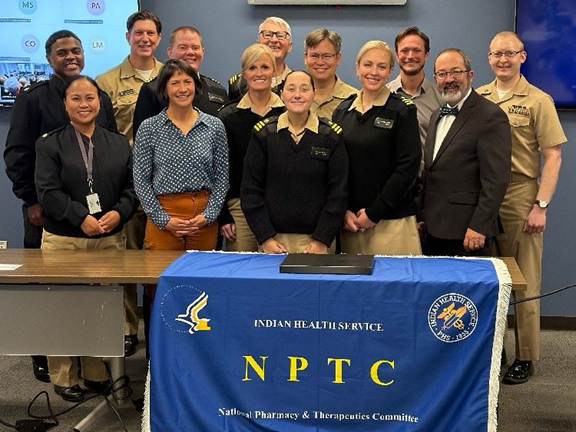
National Pharmacy and Therapeutics Committee Convenes for Quarterly Meeting
The IHS National Pharmacy and Therapeutics Committee (NPTC) held its Summer 2026 quarterly meeting at the Albuquerque Area Office on August 4–5. The NPTC is a standing committee of the IHS that works to promote quality, access, and value in formulary management through maintenance of the IHS National Core Formulary (NCF) and the provision of clinical expertise related to pharmacotherapy and pharmacovigilance. NPTC membership includes physicians and pharmacists and consists of two officers, voting members representing each of the IHS Areas, and adjunct members from the IHS National Supply Service Center.
During the meeting, the NPTC reviewed a range of topics including allergic rhinitis, disorders of menstruation, hospice care medications, GLP-1 receptor agonists, a drug class review of gabapentinoids, and a review of chronic obstructive pulmonary disease guidelines. For more information about the NPTC, including clinical guidance documents and the IHS NCF, visit their website. To receive NPTC correspondence and clinical updates, self-enroll to the NPTC Listserv.
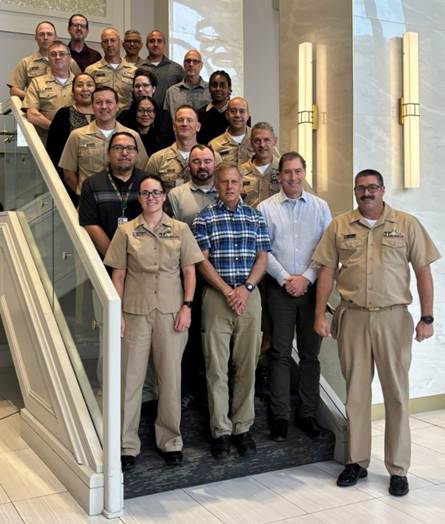
Institutional Environmental Health Program Holds Annual Meeting
The Division of Environmental Health Services (DEHS) Institutional Environmental Health (IEH) Program and Environmental Health Support Center held the 2026 Institutional Environmental Health Annual National Technical Meeting August 5–7 in Minneapolis. Participants reviewed current program priorities, identified opportunities to strengthen services, and developed improvement initiatives for 2026–2027. Discussions addressed industrial hygiene, occupational safety and health, health care accreditation, environmental patient safety, infection prevention, radiation protection, and emergency management. The meeting also featured presentations from the Division of Facilities Engineering and Office of Quality.
The meeting followed the American Society for Health Care Engineering’s Health Care Facilities Innovations Conference that was held on August 3–5, where IHS representatives presented “Retro Dashboard, Real Results: Taming the Physical Environment,” highlighting approaches to improving the health care physical environment. For more information on the DEHS IEH Program, including career opportunities, contact your area institutional environmental health officers or Brian Hroch at brian.hroch@ihs.gov or 240-478-2724.
IHS Headquarters HIV/HCV/STI Syndemic Branch Site Visits
On August 4–5, the IHS Headquarters HIV/HCV/STI Syndemic Branch met with the Great Plains Tribal Leaders Health Board (GPTLHB) and the Cheyenne River Sioux Tribe in South Dakota. The GPTLHB, a recipient of the Ending the HIV/HCV/STI Epidemics in Indian Country Award, provides capacity-building support, training and resources to Tribes in the Great Plains Area to strengthen HIV/HCV/STI testing, treatment and prevention efforts. The branch also met with Cheyenne River staff to identify strategies for improving access to HIV syndemic services and strengthening linkage to care at the service unit and throughout the community.
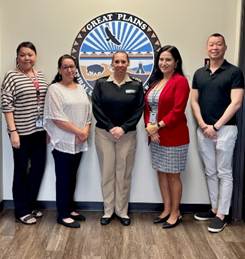
Public Health Nursing Program Site Visits Support STI Case Management
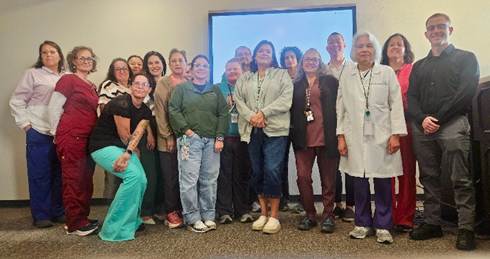
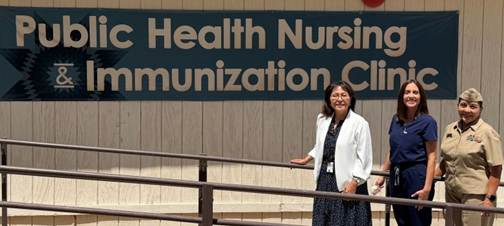
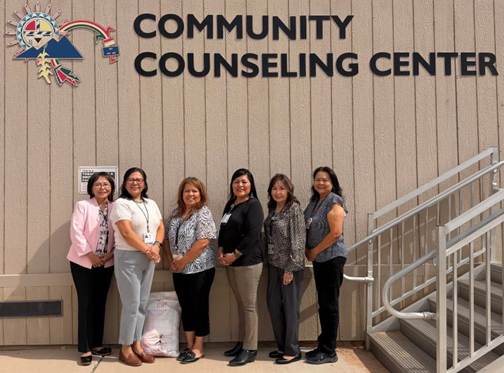
IHS Public Health Nursing (PHN) Program staff conducted site visits on August 10–11 with the Phoenix Indian Medical Center PHN Program in Phoenix and Tuba City Regional Health Care Corporation in Tuba City, Ariz. The visits focused on aligning activities with program goals, assessing progress, identifying training needs, and providing technical assistance for the IHS Public Health Nursing STI Case Management Cooperative Agreement. The visits support ongoing efforts to reduce sexually transmitted infections in Indian Country through community-based public health nursing interventions and services.
IHS Announces Callout for Hall of Tribal Nations
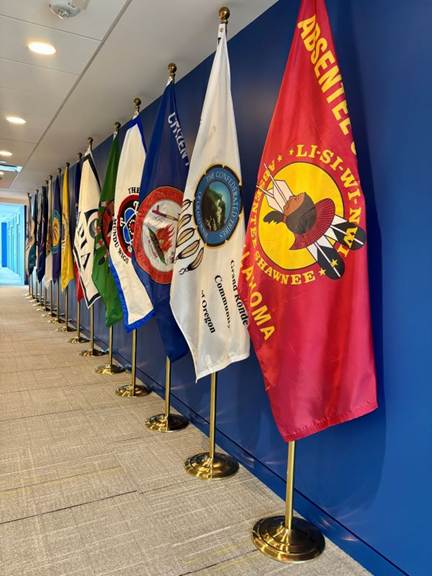
Federally recognized American Indian and Alaska Native Tribes are invited to contribute a Tribal flag for display in the IHS Hall of Tribal Nations at IHS headquarters in Rockville, Md. This display recognizes Tribal nations, honors the government-to-government relationship, and contributes to ongoing efforts to indigenize federal spaces by ensuring Tribal nations are visibly represented and celebrated. Please mail your Tribal flags (approximately 3 feet by 5 feet) to the following address:
Indian Health Service
Office of Tribal and Urban Affairs
IHS Hall of Tribal Nations
5600 Fishers Lane, Mail Stop: 06E21C
Rockville, MD 20857
IHS Clinical Support Center Earns Joint Accreditation Reaccreditation Through 2030
The IHS Clinical Support Center (CSC) has earned another four years of Joint Accreditation for Interprofessional Continuing Education, extending its more than 34-year history of providing accredited continuing education to health professionals serving IHS, Tribal, and urban health programs.
Each year, CSC works with continuing education coordinators and planners to certify more than 440 educational activities and award more than 25,000 continuing education credit hours. Through courses, conferences, webinars, regularly scheduled series, and on-demand learning, CSC helps health care professionals strengthen their knowledge and skills and bring current evidence and best practices into patient care.
Monthly Quality & Process Improvement Office Hours – August 26
The Division of Innovation and Improvement invites staff to monthly Quality Improvement and Process Improvement Office Hours, an interactive space to strengthen skills and explore the science of improvement. Participants can refresh previous training, deepen their knowledge of approaches, such as Lean Six Sigma and the Model for Improvement, and gain practical tools to streamline processes and turn ideas into measurable results.
The sessions are designed to build improvement capacity across IHS and help staff lead meaningful change in the services we deliver every day. Join the conversation, sharpen your skills, and discover new ways to put improvement into practice.
- Quality & Process Improvement Office Hours on August 26 at 2:00 p.m. ET | Join here.
Office of Human Resources Attends AAFP FUTURE 2026 Conference
On July 30–August 1, staff members of the headquarters Office of Human Resources recruited at the American Academy of Family Physicians FUTURE 2026 Conference held in Kansas City, Mo. The event attracted family medicine residents and medical students from across the U.S. Attendees were excited to learn about IHS career opportunities, medical elective rotations, and the Loan Repayment Program.
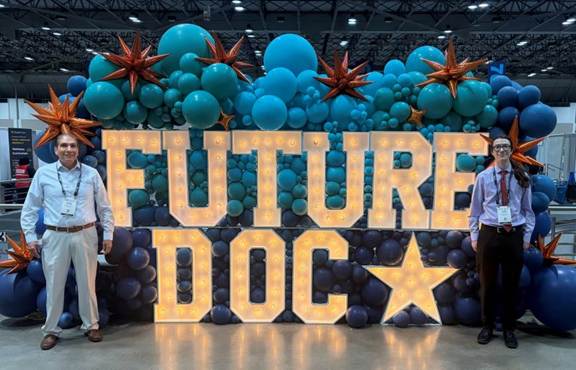
IHS recruiters Justin McHorse and Jeremy Sheehan at the FUTURE 2026 Conference
Telebehavioral Health Center of Excellence Webinar Series
The Telebehavioral Health Center of Excellence Tele-Education Program is hosting the following webinar for health care providers:
- Telehealth Webinar Series: "Intimate Partner Violence and Sexual Assault Care: Basics for the Busy Provider” on Tuesday, August 25 at 12:00 p.m. ET | Register here.
- Child and Adolescent Behavioral Health Webinar Series: "Physical Activity and Children with Neurodevelopmental Disorders” on Thursday, August 27 at 2:00 p.m. ET | Register here.
IHS Blogs
Subscribe to the IHS blog by providing your name and email address in the “Stay Connected” box.
Social Media
Follow the IHS on Facebook, LinkedIn, and X, to see more of what the IHS is doing in your community and around the country. You can also follow the IHS Director on Facebook and X.