
Youth Corner: Pediatric Diabetes Resources
Supporting healthy habits early in life can help children and youth build a strong foundation for lifelong health and well-being. The Youth Corner provides resources to help educate and empower young people, families, caregivers, and health care professionals with information about diabetes prevention and management. Explore programs, educational materials, and other resources from the IHS Division of Diabetes Treatment and Prevention designed to support the health and wellness of Native youth.

Healthy Native Youth and Diabetes Prevention
This tip sheet is designed for parents and caregivers to help guide them in building a healthy future for their children. It includes tips on helping kids stay active, establishing healthy eating habits, and involving youth in family meals.
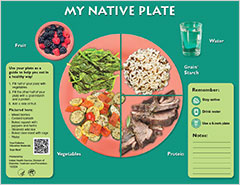
My Native Plate - Updated
This nutrition education tool uses a plate as a guide to show balanced meals with reasonable portion sizes. The front features a sample meal with traditional foods. The back shows 3 more sample meals and tips to add variety to meals and snacks.
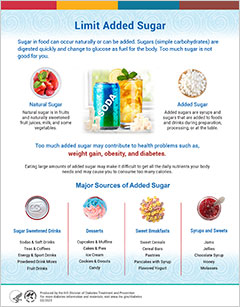
Limit Added Sugar
Learn about added sugars and the risks of consuming too many. The featured Nutrition Facts label shows users how to find added sugars and set daily limits.
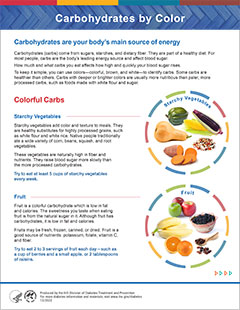
Carbohydrates by Color
To keep it simple, you can use colors--colorful, brown, and white--to identify carbs. Use this fact sheet to help your patients/clients identify carbs by color.

Pediatric Obesity Webinar Series for Clinicians Caring for Indigenous Youth
This six-session series discusses the complex causes of pediatric obesity, including the role of social drivers of health, the impact of weight bias, and the primary care clinician's role in assessing contributing factors to obesity. Evidence-based treatments and strategies on how to implement the American Academy of Pediatrics' Clinical Practice Guidelines will be discussed.
1 hour of free Continuing Education Credit offered per session
Accredited Sponsor: IHS Clinical Support Center.
Helping Children with Obesity: Context, Understanding, and Tools
Despite the fact that obesity is widely recognized as a major concern for the health of children, treatment approaches often overlook the societal context. The presentation will review this context and use it to inform management strategies.
Thomas Faber MD
Chief Medical Officer
Albuquerque Area Indian Health Service
Evaluation and Management of Pediatric Obesity: An Overview of the AAP Clinical Practice Guideline
The American Academy of Pediatrics (AAP) published its first clinical practice guideline on pediatric obesity in 2023. This presentation will provide an overview of the recommendations for clinicians on the evaluation and treatment of pediatric obesity for children and adolescents.
Ashley Weedn MD, MPH, FAAP
Director, Pediatric Obesity Research
University of Oklahoma Health Sciences Center Medical Director, Healthy Futures Clinic, OU Health
Pediatric Obesity Webinar Series for Clinicians Caring for Indigenous Youth
This six-session series discusses the complex causes of pediatric obesity, including the role of social drivers of health, the impact of weight bias, and the primary care clinician's role in assessing contributing factors to obesity. Evidence-based treatments and strategies on how to implement the American Academy of Pediatrics' Clinical Practice Guidelines will be discussed.
1 hour of free Continuing Education Credit offered per session
Accredited Sponsor: IHS Clinical Support Center.
Helping Children with Obesity: Context, Understanding, and Tools
Despite the fact that obesity is widely recognized as a major concern for the health of children, treatment approaches often overlook the societal context. The presentation will review this context and use it to inform management strategies.
Thomas Faber MD
Chief Medical Officer
Albuquerque Area Indian Health Service
Evaluation and Management of Pediatric Obesity: An Overview of the AAP Clinical Practice Guideline
The American Academy of Pediatrics (AAP) published its first clinical practice guideline on pediatric obesity in 2023. This presentation will provide an overview of the recommendations for clinicians on the evaluation and treatment of pediatric obesity for children and adolescents.
Ashley Weedn MD, MPH, FAAP
Director, Pediatric Obesity Research
University of Oklahoma Health Sciences Center Medical Director, Healthy Futures Clinic, OU Health
Move for Wellness - Engaging Youth in Circuit Training
Presented by IHS with Scott Robison, Community Health Director at Wewoka Indian Health Center.
Four Tucson Families
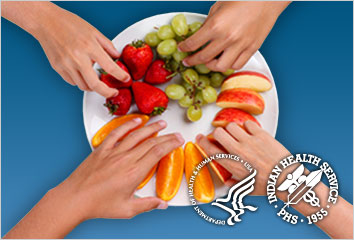
Here are the stories of four Native American families who took small steps to eat healthier food.
Move for Wellness - Engaging Youth in Circuit Training
Presented by IHS with Scott Robison, Community Health Director at Wewoka Indian Health Center.
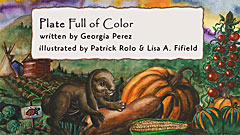
Eagle Book Series: Plate Full of Color
Plate Full of Color, the third book in the Eagle Book children's book series introduces Miss Rabbit and the boys' friends, Little Hummingbird and Simon. Miss Rabbit teaches the children the value of eating a variety of colorful and healthy foods.
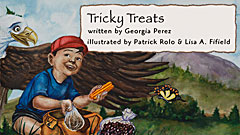
Eagle Book Series: Tricky Treats
Tricky Treats, the fourth book in the Eagle Book children's book series, introduces Coyote, a trickster who attempts to trick the children into eating unhealthy foods. The children ultimately learn the importance of avoiding tricky treats when choosing foods to eat.
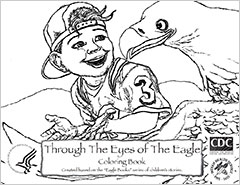
Through the Eyes of the Eagle - Coloring Book
Created based on the "Eagle Books" series of children's stories.
- Download Color Book [PDF]
| Organization | Resource |
|---|---|
|
Indian Health Service
|
|
HHS Office of Disease Prevention and Health Promotion
|
|
USDA Food and Nutrition Administration | U.S. Department of Agriculture
|