In 2025, the Elder Health Team of the Indian Health Service (IHS) Alzheimer's Program continued efforts to advance dementia care across the Indian Health Service, tribal, and urban Indian health ( I/T/U) sites and American Indian and Alaska Native communities. Our strategy was driven by four key priorities:
- Expanding Care: Increasing access to dementia services and screenings through strategic grants and funding.
- Building Workforce: Equipping clinicians, nurses, and community health representatives with dementia knowledge and skills through training and development efforts.
- Increasing Awareness: Engaging families and communities through culturally relevant outreach, education, and social media.
- Data-Driven Management: Strengthening program infrastructure, partnerships, and clinical tools to improve health outcomes.
Here’s a look at some of the work helping more elders receive high-quality, timely dementia care closer to home, in ways that honor their values and traditions.
Expanding Care Through Grants & Innovation
Our grant initiatives substantially expanded their footprint in 2025. We expanded our network to 18 grantee sites, reaching approximately 95,000 elders.
- Models of Care: We awarded 10 new three-year Models of Care grants. These partners are implementing critical services in dementia detection, care coordination, and caregiver support.
- Simplifying Access: To support innovation, we contributed to the HHS “Simpler NOFOs Pilot,” streamlining the application process for the FY 2026 Grants so tribal partners can access funding more easily.
- Dementia Screening Pilot Initiative: We provided training, support, and peer-to-peer learning opportunities supported by modest financial incentives to twenty I/T/U CHR programs.
Building Workforce Capacity
Building a skilled workforce is essential to our mission. In 2025, our training initiatives reached over 1,500 clinicians across the system, strengthening our capacity to provide high-quality dementia care.
- Geriatric Champions: Our network of 98 geriatric champions continued to grow through our two flagship programs: the Indian Health GeriScholars (IHGS) for physicians, physician assistants, pharmacists, and nurse practitioners, and the Geriatric Nurse Fellowship (GNF) for nursing staff. In May, we graduated 15 IHGS scholars (Cohort 3), followed by nine nurse fellows (Cohort 2) in July. Both programs have already recruited their next cohorts, with 30 new participants beginning their journey. The new group of champions now leads local quality improvement projects on critical topics, including fall prevention, medication management, and behavioral health support.
- Clinical Training: We launched a live skills-based pilot in July that reached 312 clinical staff. Building on this success, we engaged 114 Community Health Representatives (CHRs) in dementia care training throughout the year. Through the CHR Mini-Cog Pilot, these frontline workers are now empowered to perform early cognitive screenings directly in patients’ homes, bridging a critical gap in access to diagnosis.
- Professional Support: Through our Indian Country ECHO programs, we issued 94 continuing education certificates and connected over 400 participants to peer mentorship. Additionally, we expanded access to expert guidance through the new Dementia Clinical Support Line, providing teleconsultation services to help providers manage dementia care across the I/T/U sites.
Increasing Awareness & Partnerships
Our outreach efforts resonated widely in 2025, generating over 127,000 social media engagements.
- Community Impact: We engaged nearly 3,500 elders through culturally grounded health events. Notably, 74% of respondents in our Alaska events reported walking as their most enjoyable physical activity, highlighting the success of our culturally tailored programming.
- Digital Reach: We delivered trusted health information by way of more than 7,700 newsletter copies and produced over 800 images capturing elders and caregivers in local clinical and community settings.
- Culturally Respectful Care: We released three Mini-Cog training videos and entered post-production on three new videos slated for 2026 that will speak directly to elders to promote early screening, share opportunities to get involved, and speak to the power of advance care planning.
Data-Driven Management & Clinical Tools
We strengthened the clinical infrastructure that supports our providers and health systems.
- Clinical Pathway: A major milestone was the launch of the IHS Dementia Clinical Pathway, developed in collaboration with local tribal and urban clinical providers, to support a consistent standard of care across the system.
- Award-Winning Research: Our commitment to data excellence was recognized nationally when our team’s collaborative study was named the “JAGS Top Ethnogeriatrics Paper of the Year” by the Journal of the American Geriatrics Society.
- Defining National Standards: In a significant step for long-term impact, our program was selected for inclusion in the Health and Human Services Agency Evaluation Plan. We are now leveraging data from our Models of Care grantees to identify common themes in dementia care, laying the groundwork for standardized, measurable care elements that can be adopted nationwide.
Looking Ahead
In 2026, we will build on this momentum by convening the IHS Clinical and Community Workforce Summit in Denver, Colorado (March 10-12). With the theme, “Alzheimer’s and Elder Care: Knowledge, Compassion, and Community at Work,” this gathering will bring together hundreds of partners to set the next standard for elder care.
The Elder Health Team of the IHS Alzheimer’s Program remains committed to ensuring that elders and families receive the care and support that promotes wellness and quality of life.

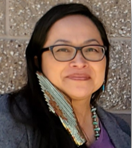
As the IHS national elder care consultant, Dr. Jolie Crowder is a team lead responsible for planning, formulating, and implementing national elder care policies and programming, focusing on dementia and Alzheimer's. Dr. Crowder brings 30 years of experience to her new position at IHS in nursing, health care, public health, and aging services, primarily in the non-profit sector. She has worked for more than a decade on tribal aging issues.